
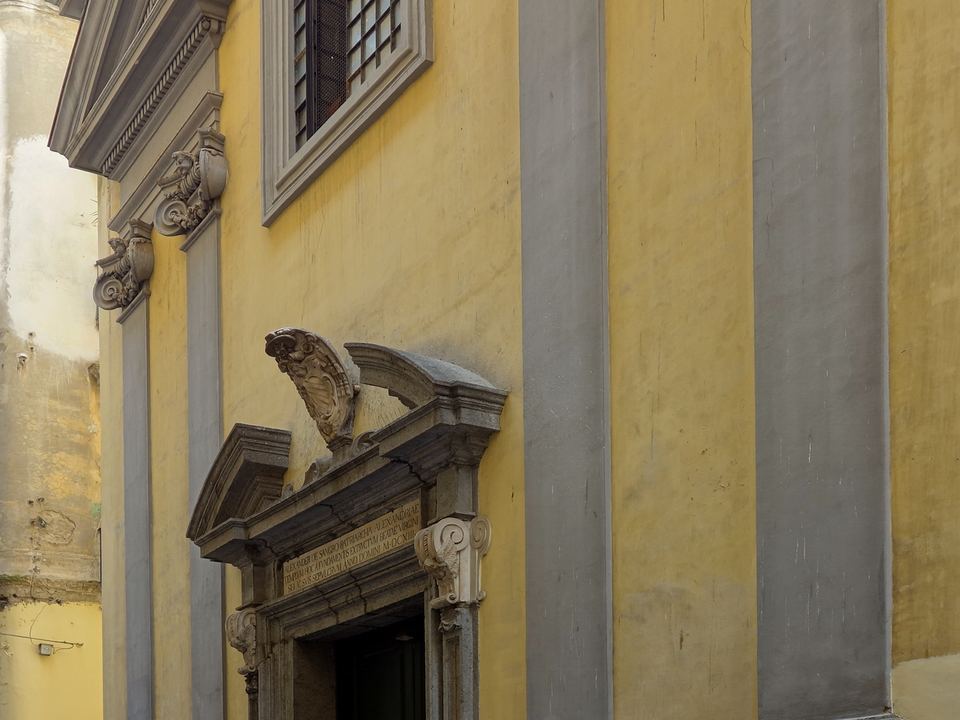
Cappella Sansevero
- Church & Religious Site
- Art Museum & Gallery
- Price: €7 - €10
- Opening hours: 09:00 - 19:00, closed Tue
History
The chapel's roots reach back to around 1590, when Giovan Francesco di Sangro, Duke of Torremaggiore, is said to have recovered from a serious illness after praying before a miraculous image of the Madonna on this spot and, in gratitude, built a small votive chapel known as Santa Maria della Pietà. It remained a modest family shrine for well over a century, until Raimondo di Sangro, seventh Prince of Sansevero — a restless polymath equally at home with alchemy, printing presses and Masonic ritual — rebuilt and re-decorated it from the 1740s into the dense, symbol-laden space visitors encounter today.
For the chapel's centerpiece, Raimondo first commissioned the Venetian sculptor Antonio Corradini, who had already carved the veiled Modesty as a memorial to the prince's mother; Corradini died in 1752 having produced only a small terracotta model of a veiled Christ. The commission passed to the young Neapolitan sculptor Giuseppe Sanmartino, who set the earlier model aside and carved his own interpretation from a single block of marble in 1753 — a surviving bank document records a down payment of fifty ducats against a total fee of five hundred, still bearing Raimondo's signature.
Did you know?
For more than two centuries, guides and even scholars insisted that the Veiled Christ's impossibly transparent shroud could only be explained by some alchemical process — a marble somehow chemically softened and draped by Prince Raimondo himself, the supposed mad scientist of the family. Study of the surviving payment records and the sculpture's surface lays that legend to rest: shroud and body were carved from the same single block of stone by Sanmartino's chisel alone, with no laboratory trickery involved, however much the illusion still fools visitors' eyes today.
Downstairs, the two so-called Anatomical Machines — a male and a female skeleton wrapped in what looks like a complete, dried circulatory system — fed rumors that Raimondo had servants killed and their veins injected with some secret embalming fluid. Notarial records instead date the pair to 1763-64 and credit them to Giuseppe Salerno, an anatomist from Palermo, and a 2008 study by researchers confirmed the skeletons are genuine while the intricate "veins" are wire, coloured wax and silk thread — extraordinary craftsmanship rather than any injected corpse.
Good to know
Entry is by timed ticket only, booked online in advance — walk-up admission generally isn't possible, and slots for popular hours disappear quickly in high season. The chapel is closed on Tuesdays, and photography of any kind is strictly forbidden inside, a rule enforced closely by attendants to protect the marble from flash damage and simply to keep the small space moving.
Because the chapel is tucked down a narrow lane just behind the apse of San Domenico Maggiore, the two make an obvious pairing on the same walk through the Spaccanapoli district, along with the nearby Pio Monte della Misericordia. With photography off the table, it's worth simply slowing down in front of the Veiled Christ from a few different angles and distances — the play of light across the marble veil changes remarkably as you move around it.