
Naples Underground
- Experience & Tour
- Historic Site
- Price: €6 - €10
- Opening hours: Guided tours only, hourly 10:00-18:00
History
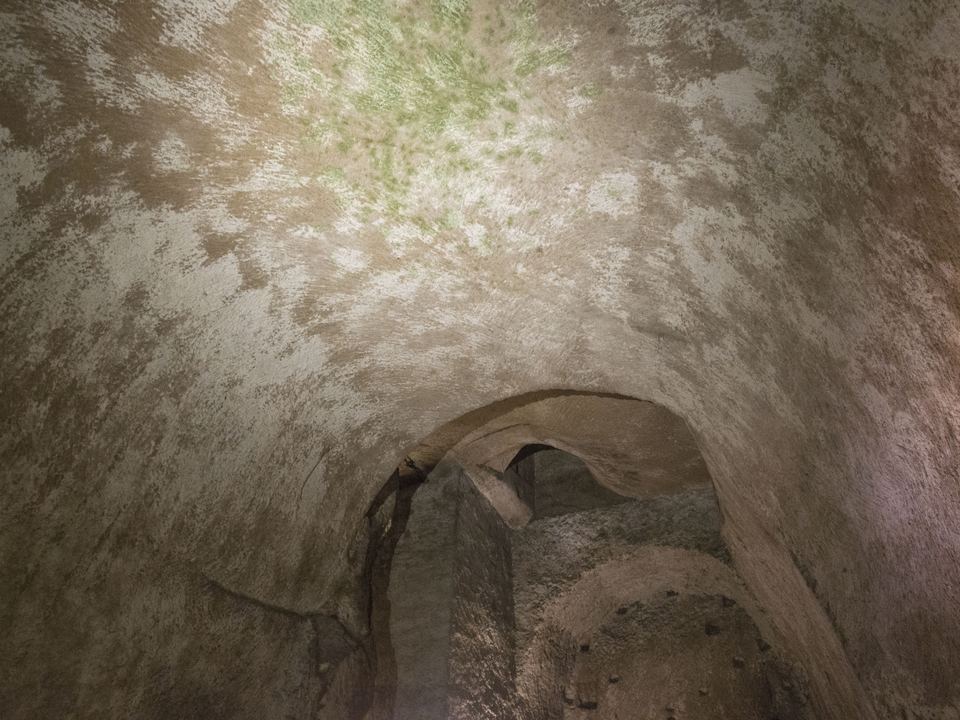
Quarrying tuff by hand meant sinking narrow vertical shafts down to the rock, then hollowing out chambers and galleries sideways from the bottom — a technique the Greeks who founded Neapolis used from the fourth century BC onward, and one that left the underground riddled with the wells still visible along the route today. Centuries later, Roman engineers of the Augustan age folded this quarry network into something far more ambitious: an aqueduct fed by the springs of Serino, in the hills of Irpinia some 70 kilometres away, whose water travelled largely underground to supply Naples and several other Campanian towns for the best part of two millennia.
After the cholera-driven closure of the aqueduct in the late nineteenth century, the tunnels fell into disuse and for decades served as an unofficial dumping ground, filling with rubble and refuse from the streets above. Their fortunes changed again in 1942, when Naples' civil engineering corps cleared and adapted stretches of the network as air-raid shelters, cutting new stairways down from street level; over the following two years, as Naples endured more Allied bombing raids than almost any other Italian city, tens of thousands of residents sheltered in these same tunnels their ancestors had helped carve from the tuff.
Did you know?
According to the Roman historians Tacitus and Suetonius, it was in Neapolis's Greco-Roman theatre — its remains threaded through the tunnels and cellars along the route — that the emperor Nero chose to make his public singing debut, reasoning that a Greek city would appreciate his art more than status-conscious Rome. Ancient sources record that partway through the performance an earthquake shook the building; Nero, apparently undeterred, simply carried on singing until he finished, an episode later generations read as either remarkable composure or a telling early sign of his detachment from reality.
Deep in the same tunnels, an experimental garden now grows basil, salad greens and other crops entirely by artificial light, using hydroponic and aeroponic techniques that need no soil and only a fraction of the water an outdoor plot would require; the project traces back to an initiative launched around Expo Milano 2015 to test how food might be grown in extreme, light-starved environments. A handful of vegetables now sit within a few dozen metres of Roman masonry built to carry water in the opposite direction, up rather than down.
Good to know
Visits are by guided tour only, departing roughly every hour between 10:00 and 18:00, with tickets in the €6-10 range; tours run around ninety minutes and involve some stairs and low, narrow passages, so comfortable shoes are worth wearing, and a light layer helps since the tunnels stay noticeably cooler than the streets above at any time of year. Booking ahead online is recommended, particularly in summer, when tours can sell out by early afternoon.
The entrance sits on Piazza San Gaetano, the same square as the excavations beneath the Basilica of San Lorenzo Maggiore, making it easy to combine both underground visits with a walk along Via dei Tribunali in a single morning or afternoon. Because the tour covers no photography-friendly grand vistas but rather close, atmospheric passageways, a small flashlight or a phone with a working camera flash adds more to the experience here than at most of Naples' other sights.